
The Best Way To Learn Our Reo: Comprehensive Input for Cook Islands Maori
How You Can Pick Up Our Language… The Best Way
First and foremost, I'd like to express my gratitude to all of you.
Thank you so much for following my Facebook page or YouTube channel to learn Cook Islands maori. Your support is my biggest source of motivation.
Today, I want to delve into a live stream because many of you have been inquiring about how to embark on the journey of learning Kuki.
I thought this would be an excellent topic to tackle.
So, my husband and I have prepared some language learning strategies and resources for you which will reveal some "Knowledge Bombs" to help you in your journey.
Understanding Second Language Acquisition
First and foremost, if you aspire to learn our reo, it's essential to comprehend how the human brain acquires a second language. Makes sense…right?
I recommend delving into Dr. Stephen Krashen's theory of second language acquisition.(google him). According to his theory, the only way the human brain can truly grasp a new language is through Comprehensible Input.
Comprehensible Input Explained
Now, what exactly is Comprehensible Input?
- "Comprehensible" means "messages you “sort of get”... understand."
- "Input" means "something that is put in," like your ATM EFTPOS card, and in language terms input refers to tv, music, talking, pictures, physical movements, dancing, etc etc
So when it comes to learning the Cook Islands language, comprehensible input refers to material (inputs) that learners stretch a bit to understand , helping them build their competence or skillset in speaking the reo.
Communication.
It doesn't mean you have to be an expert, but it strongly favours you when starting out.
It means as a beginning student,you get enough understandable inputs to build your ability to speak Cook Islands Maori, word by word, sentence by sentence.
In educational teaching terms, this comprehensive input method is often referred to as Total Physical Response (TPR) or the method we apply …Teaching Proficiency through Reading & Storytelling.(TPRS).
Both systems were born out of the comprehensive theories made widespread by Dr Krashen. The results for language learners worldwide are well documented and students have a high rate of success.
Both methods involve alot of interaction and engagement by the teacher or trained tutor. This caters to the different learning styles that individuals have.
Engaging Teaching Methods
In this teaching method, educators provide students with a wealth of captivating input (captivating means "capable of attracting and holding interest").
Research suggests that a learner needs to encounter a word around 38 times to fully internalize and remember it. The TPRS method contains alot of repetition that cements sentences and phrases that form the basis of everyday speech. If you have been on a language course before and you havent had much success, this could be one of the reasons why. Not enough repetition, like we all had, when we were growing up.
To illustrate comprehensible input, let me give you three examples, all delivering the same message in three different ways.
In the first message:
Written txt only
"E rua ōku mata, e rua ōku taringa, e ta’i ōku putangi’u, e taí ōku va’a .
In the second message,
written txt and spoken audio, I'll speak slowly and enunciate clearly:
"E rua ōku mata, e rua ōku taringa, e tai ōku putangi’u , e ta’i ōku va’a .
For the third message,
I'll incorporate body language and pictures to enhance understanding, plus the written words and imagine I’m speaking it:
"E rua ōku mata, e rua ōku taringa, e ta’i ōku putangi’u, e ta’i ōku va’a.
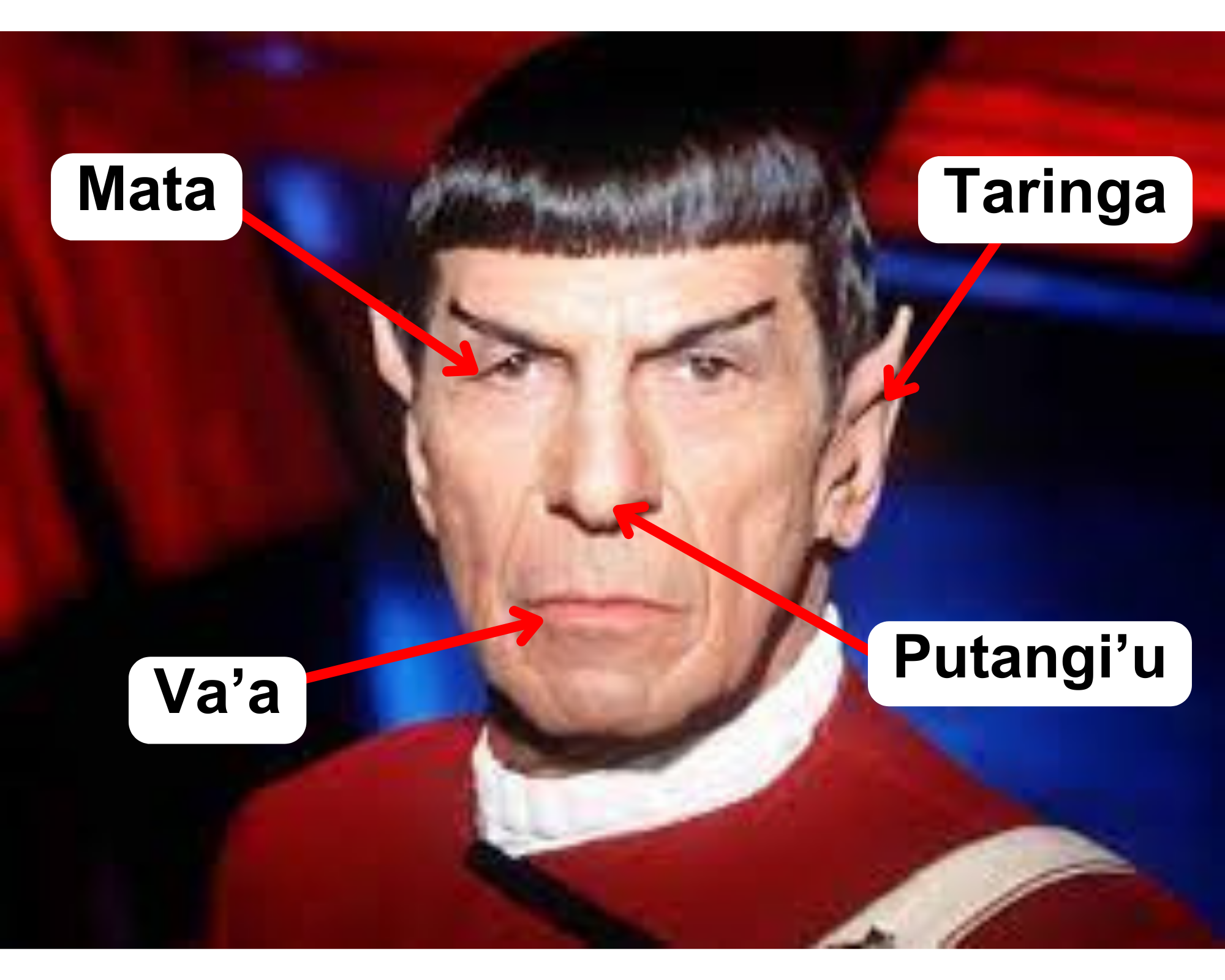
I'm sure you'd agree that the third method is the most understandable. Thats an example of comprehensive input. You can work out the message without english translation.
This third method provides body language, which is a fundamental component of the comprehensible input teaching strategy. It resonates well with most of us Pacific Islanders because alot of us are kinesthetic learners, (physical learners) which means we learn by “doing and seeing” better than by studying, which leans alot on reading and writing.
Reading and writing are suited to visual learners, which is suited towards academics. Or as we use to say in my neighborhood…the The Doctor Spocks!
In our TPRS course, we use more than 90% of comprehensive input for teaching, as it's crucial to ensure that students understand the messages and meanings.
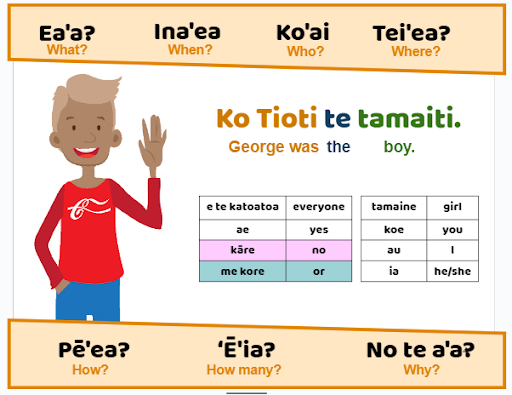
If they don't “compute”, they will miss out on the “basic building blocks”.
The thing is without solid first-level frequently used words, its hard to build your vocabulary and communication skills to speak fluently.
Common sense, wouldn't you agree?
So its really key to establish a solid beginners platform.
Solid as in key words, most frequently used words, and repetition, repetition, repetition till you have it locked down in your subconscious consciousness. Deep.
The TPRS method often emphasizes that you don't necessarily need to speak Kuki to understand it, as long as your teacher provides comprehensible input, ie Resources, strategies, and methods that you understand easily.
Hence those of you who for one reason or another cannot speak (mute or vāvā) can still acquire the lingo through understanding the messages.
Effective Learning Tips
So, the first tip I'd like to share is that for effective Cook Islands reo learning, all your input, whether through listening or reading, should be 100% comprehensible.
Anything less, like 50% or 80%, won't yield the best results.
Some teachers may recommend passive listening as a way to enhance your listening skills. For example, playing Kuki audiobooks or Kuki music in the background while you go about your daily activities. However, passive listening isn't as effective as you might think. To truly learn a language, you must understand every word and sentence you encounter.
Listening passively is a long long way to get to fluency. However, listening with intention to pickup the meaning of the song (lyrics) is totally different.
The Order of Learning Kuki
The second tip pertains to the order in which you should learn our reo.
It's crucial to follow a sequence from listening to speaking, then reading to writing.
Listening>>>>>>>>Speaking>>>>>>>>Reading>>>>>...Writing
This order is designed to mimic how we naturally picked up english from babies to our teens.
Babies start by listening to a lot of language and understanding its meaning before they begin to speak.( take special note of the italicised part).
Speaking, in turn, arises from listening.
As you hear words repeatedly, you naturally learn to pronounce them correctly.
Makes sense, right?
For those struggling with pronunciation, repeated listening and comprehension are the keys to mimicking and perfecting your pronunciation.
Sidenote:
Wouldnt it be great if we had Netflix in the Cook Islands reo.Your listening skills and mimicking will give you fluency simply by watching and listening to movies. Probably true to say that's how you got your English if you're ANZ-born Kuki (Aussie NZ), or wherever you were raised; by being exposed to English TV and films.
The third step is reading.
Once you understand the sounds, you can connect them with the written language.
You should read Kuki books and articles while simultaneously recognizing their pronunciation and meaning.
Only after you've developed listening and speaking skills should you tackle reading.
Finally, writing words should come last.
Learning to write a word without understanding its sound, meaning, and structure won't be as effective.
Its like building a house... by starting at the roof. We need the floor, walls, and structure in place, first.
The sound and meaning should be ingrained in your memory before you start writing words, making writing easy.
Cast your mind back to when you were in the primmers and standards 1-4.
Writing was easy after we learnt to make the sounds out of our mouths…not the other way around. Remember? We went from the playground (yacking away with our friends) to the classroom (where suddenly, we had to read and write our “yacks!”. They called them “story writing” time.(Yuck, for us sporty types who just wanted to play)
True or not true??
Learning Kuki for Free and Additional Resources
Now, for the third tip: Learning Kuki for free.
We have compiled numerous free and paid resources (because there were none available online world-wide!) to help you in your language journey.
If you're starting from scratch, consider using the Cook Islands Language Academy app.
This app introduces you to new words and offers a fun way to practice with lots of repetition. We have free resources in there that will get you going. Have a tutu around. Start anywhere. Start where you are most interested. Songs, books, prayers, interviews.
When your serious about wanting to connect with your tribe and hold the mana that comes with being a Cook Islands Maori speaker of the reo…get access to TPRS Cook Islands.
Final word:
In addition to these resources, I encourage you to find a language partner.
Preferably one who is a native speaker and wants to help you go forward, not one who wants to pick up on all your mistakes.
A language partner is not a teacher but someone with whom you can engage in conversations and practice. It's like having a tennis partner, if you play tennis. Someone to whack the ball against. And they whack back.
They can help you when you have questions and add humoúr to your language learning experience, making the process more enjoyable, effective and fun.
It's much easier to acquire our language when you have fun and speak every day with a native speaker.
It tends to stick.
And you learn super super fast.
Ask my hubby.
These are my suggestions for picking up our reo based on my own teaching experiences and the theories of Dr. Steven Krashen.
If you have any questions, feel free to ask.
Thank you for your time & attention,
Tukia! (Lets Do it!)
Neita
Ps
Is this conversation helpful so far?
Leave a comment of what you think? Or your biggest take-away.
Meitaki.

Copyright @ CookIslandsLanguage 2023
Cook Islands Language Academy
www.CookIslandsLanguage.com
Rarotonga-Cook Islands | +682 74289
Auckland Office: New Zealand | +64275125727
Newsletter
Subscribe now to get daily updates.
Copyright @ CookIslandsLanguage 2023
Cook Islands Language Academy
www.CookIslandsLanguage.com
Rarotonga-Cook Islands | +682 74289
Auckland Office: New Zealand | +64275125727
Newsletter
Subscribe now to get daily updates.